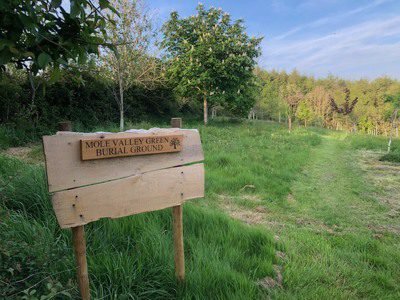
Set on an organic farm in North Devon, Mole Valley offers green burial and ashes interment within a wildflower meadow, with a native tree planted for every burial. Only biodegradable coffins, urns and shrouds are permitted. The site is left to grow naturally through the seasons, evolving into woodland over time. Read more…
Woodland Burials, Memorial Trees and Eco Urns in Devon
Eco memorials cover every nature-led way to remember someone, from a woodland burial or natural burial ground to planting a memorial tree or choosing a biodegradable urn. Many families now look for a green burial or eco funeral instead of a traditional cemetery, because the land is managed for wildlife rather than filled with headstones, and it becomes richer over time rather than simply being maintained.
Most natural burial grounds accept ashes as well as full burials, so they work just as well for families who have already chosen cremation. Graves are marked simply, often with a tree, a wooden marker or a small plaque, and many sites record the exact spot by GPS or what3words so it can always be found again.
Below you’ll find UK natural burial grounds, woodland burial sites, memorial tree schemes, biodegradable urns and other nature-led tributes.

Sharpham Meadow is a hay meadow in the South Hams Area of Outstanding Natural Beauty, looking down over the River Dart. Both full burial and ashes interment are available, and they are open to everyone regardless of faith, where they live or what sort of ceremony they want. Only simple flat headstones are allowed, with no additional memorials or planting, Read more…

South Hams Natural Burial Ground is woodland at Aveton Gifford in a Devon Area of Outstanding Natural Beauty, with open views across the countryside. Burial plots, cremation plots and ash scattering are all offered, so families have the full range of options in one place. Memorials can be personalised with a tree or a hand-crafted bench. The thing that sets Read more…

Bidwell is a working woodland in South Devon, planted in 1998 with a mix of broadleaf and conifer, with views out to Dartmoor and across the South Hams. It was named Cemetery of the Year by the Good Funeral Guide in 2012. Their approach centres on the cycle of life, with the woodland managed as a perpetual and sustainable space Read more…
Verified
Hackpen sits on a regenerative smallholding in the Culm Valley, where the burial ground runs alongside nature-friendly farming and permaculture. The whole place is being managed to bring biodiversity back rather than simply left alone. They are open about being affordable, which matters and is rarely said out loud in this sector. Families can watch a new woodland grow over Read more…
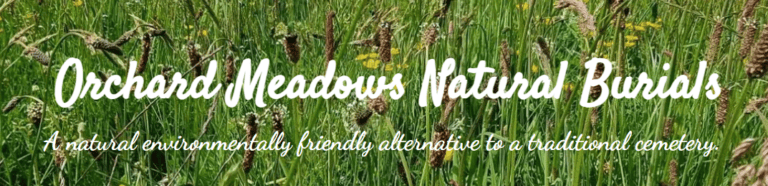
Orchard Meadows sits at Elley Cross on the border of Yeoford and Colebrooke, with long views over unspoilt Devon countryside. It is a crab apple orchard and meadow rather than woodland, planted with Malus Gorgeous trees that support wildlife and pollinators. That makes it visually quite different to most natural burial grounds, particularly in blossom. All faiths and beliefs are Read more…
Price Range: £500 to £1,000
Beer Cross is six acres of former pasture on the very edge of Dartmoor, planted out eleven years ago with around 3,500 native broadleaf trees. Cherry, field maple, spindle, ash, oak, walnut and hazel. Plots sit within a one acre section of the field, with wide views towards Cosdon Hill, Beacon and Belstone Tor. They take both full burial and Read more…
Natural burial, woodland burial or green burial?
These terms mean almost the same thing. A natural or green burial uses biodegradable coffins, shrouds or urns, no embalming and no traditional headstone, with the land managed as habitat. “Woodland burial” usually means the site is wooded, or that a tree is planted for each burial, while other sites are open wildflower meadow. Some are run by families or farms, some by charities or parish councils, and some by larger companies.
Burying or scattering ashes at a natural burial ground
Ashes interment is usually the most affordable option at a natural burial ground, and many sites have dedicated areas for it. Ashes are placed in a biodegradable urn or straight into the earth, often with a tree or small marker. Some sites also allow scattering, which not all burial grounds offer. If you’re weighing up the options, our guide to cremation vs burial in the UK explains how they compare.
Memorial trees and biodegradable urns
If you’d rather plant a tree at home or in a memorial woodland, it’s worth knowing that ashes on their own aren’t good for plants. They’re very alkaline and salty, so tree urns and memorial kits use only a small amount, mixed with a soil blend that balances it out. For more living memorial ideas, see our memorial ideas for ashes.
What to ask before choosing a site
It’s worth asking whether the grave is permanent or leased, what markers are allowed, whether you can visit at any time, whether they host services on site, and what’s included in the price. Visiting in person is the best way to know whether a site feels right.
Where to find providers
The areas with the most choice at the moment are Devon, Scotland, Hampshire, Wales and Buckinghamshire. Choose a county from the list above to see providers near you.
Is a natural burial ground different from a cemetery?
Yes. Natural burial grounds are managed to support wildlife and habitat, rather than laid out with rows of headstones. Burials use only biodegradable coffins or shrouds, and the site is left to grow naturally rather than being formally landscaped.
Can ashes be interred rather than scattered?
Yes. Most natural burial grounds offer ashes interment, where ashes are buried within the site in a biodegradable urn or straight into the earth, and marked in the same way as a full burial.
How much does a natural burial cost?
It varies a lot by site and region. Ashes interment is usually much cheaper than a full burial plot, and a few burial grounds publish their prices online, which makes comparing easier. Contact sites directly for current prices.
Can you mark a natural burial?
Most sites don’t allow traditional headstones, but many permit a small wooden or natural stone marker, a plaque or a memorial tree. Some leave graves unmarked and record the location by GPS instead.
Can ashes really be used to grow a tree?
Yes, but only in small, measured amounts alongside a soil treatment. Most memorial tree kits are designed to balance this out safely.
Do you need permission to plant a memorial tree?
On your own land, no. In a public space or on someone else’s land, you’ll need permission from the landowner or local council.
What are biodegradable urns made from?
Common materials include sand, salt, bamboo, felted wool, recycled paper, mushroom mycelium and other plant fibres. Water urns can dissolve within minutes to hours, while buried urns take months to a few years.
Browse By County
Bedfordshire
Berkshire
Bristol
Buckinghamshire
Cambridgeshire
Cheshire
Cornwall
County Durham
Cumbria
Derbyshire
Devon
Dorset
East Sussex
England
Essex
Gloucestershire
Greater London
Greater Manchester
Hampshire
Herefordshire
Hertfordshire
Isle of Wight
Kent
Lancashire
Leicestershire
Lincolnshire
Merseyside
Norfolk
North Yorkshire
Northamptonshire
Northumberland
Nottinghamshire
Oxfordshire
Rutland
Scotland
Shropshire
Somerset
South Yorkshire
Staffordshire
Suffolk
Surrey
Tyne and Wear
Wales
Warwickshire
West Midlands
West Sussex
West Yorkshire
Wiltshire
Worcestershire