The legal basics
Understanding how to scatter ashes in the UK properly starts with knowing the legal basics. Yes, scattering ashes in the UK is legal in most circumstances. For the full legal picture, including sea, land, church ground and more, see our complete guide: Is It Legal to Scatter Ashes in the UK?
Scattering ashes on land
On your own property, you’re free to scatter without any formal process. On private land, public land, church ground, or at a sports venue, you’ll need permission first, from the landowner, local authority, church, or club.
Mountains and beauty spots
Some conservation organisations advise against scattering ashes on mountain peaks or fragile natural habitats, as cremated remains can affect the soil pH and impact delicate plant life. The Lake District and some Scottish Highland locations have issued guidance on this. It’s worth checking with the relevant authority before choosing a particularly sensitive location.
For the full breakdown, including football stadium policies, churchyard permission, and family grave rules, see our complete guide: Is It Legal to Scatter Ashes in the UK?
Scattering ashes at sea or on water
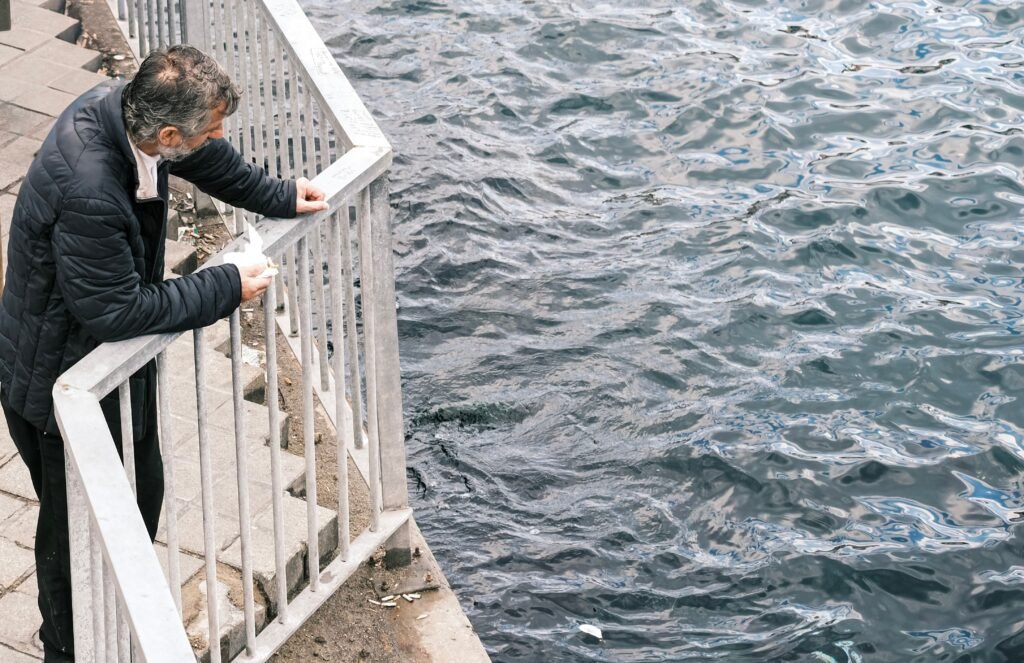
If you’re wondering how to scatter ashes at sea specifically, it’s one of the most popular choices for families in the UK, and it is completely legal without the need for a licence. However, there are a few simple guidelines to follow:
- Scatter ashes beyond the low water mark where possible
- Any tributes scattered alongside the ashes, flowers, petals, biodegradable items, must be fully biodegradable
- Avoid scattering near water extraction points or drinking water sources
- Plastic, synthetic materials, and non-biodegradable items must never be cast into water
For rivers and lakes, the same principles apply. You don’t need a licence, but check that the location isn’t near a water extraction point and always use biodegradable tributes only.
If you’re considering a burial at sea, where the ashes are placed in a container and submerged, this does require a licence from the Marine Management Organisation (MMO). Scattering loose ashes does not.
Scattering ashes abroad
If you wish to take a loved one’s ashes abroad to scatter in a meaningful location, you’ll need to check the rules of the specific country. Requirements vary significantly, some countries require documentation, permits, or have restrictions on where ashes can be scattered. Contact the embassy or consulate of the destination country well in advance to understand what’s needed.
You will also need to carry the ashes as checked luggage with the relevant documentation when flying. Your funeral director or cremation provider can advise on the correct paperwork.
Things to consider before choosing a location
Take your time. There is no rush. Unlike the cremation itself, scattering ashes can happen weeks, months, or even years later. Choosing the right moment and the right place matters more than doing it quickly.
Think about future access. If you or other family members would like to return to the location in years to come, on anniversaries or simply to feel close to them, choose somewhere you can always reach.
Consider the wishes of the family. Where possible, involve those closest to the person in the decision. Scattering ashes is a significant moment and one that many people will want to be part of.
Make it a celebration. The scattering of ashes doesn’t have to be a solemn, silent affair. Many families turn it into a beautiful celebration of life, music, readings, flowers, a gathering of the people who loved them most. It can be one of the most meaningful days you’ll ever share together.
Looking for scatter ceremony services?
Now that you know how to scatter ashes in the UK legally and respectfully, if you’d like help making the day truly special, there are wonderful UK businesses that specialise in scatter ceremonies, from arranging a boat for a sea scattering, to providing biodegradable scatter tubes and personalised keepsakes to mark the occasion.
Browse Scatter Ceremony Services on Celebrated Lives →
Wherever you choose to say goodbye, what matters most is that it feels right for you and for the person you loved. Trust your instincts, there is no wrong answer.
For full guidance on environmental considerations, the Environment Agency provides up to date advice.