What is direct cremation?
So, what is direct cremation exactly? It’s a simple, no-frills cremation that takes place without a funeral service or mourners present. The person who has passed is collected, cared for, and cremated — and their ashes are then returned to the family, usually within a matter of days.
There is no hearse, no ceremony at a crematorium, no formal gathering. Just a quiet, dignified cremation, followed by the ashes being returned to the people who loved them.
Why are so many families choosing direct cremation?
Direct cremation has grown enormously in the UK over the past decade, and for good reason. Families choose it for a number of different reasons:
Cost Direct cremation typically costs less than half the price of a traditional funeral — making it an increasingly popular choice for families who want a dignified, respectful farewell without the financial burden.
For an independent overview of funeral costs across the UK, the SunLife Cost of Dying Report is updated annually and provides helpful guidance for families planning ahead.
Simplicity Arranging a traditional funeral in the immediate days after a loss can feel overwhelming. Direct cremation removes that pressure entirely, allowing families to focus on their grief without the logistical demands of organising a service at short notice.
Freedom to say goodbye on your own terms Perhaps the most powerful reason of all. With direct cremation, there is no fixed date, no prescribed format, no expectation of how the farewell should look. Families receive the ashes and then choose — in their own time, in their own way — how they want to celebrate and remember the person they’ve lost.
That freedom is exactly where Celebrated Lives comes in.
How is direct cremation different from a traditional cremation?
It’s a question many families ask, and the distinction is simpler than you might think.
A traditional cremation involves a funeral service — usually at a crematorium or church — with mourners present, followed by the cremation itself. Families may or may not receive the ashes afterwards depending on their wishes.
A direct cremation skips the funeral service entirely. The cremation happens privately, and the ashes are returned to the family. What the family chooses to do next is entirely up to them.
Importantly — and this is something many people don’t realise — the ashes returned from a direct cremation are no different to those from a traditional cremation. The same options exist for what to do with them. The same memorials, the same keepsakes, the same ceremonies. The only difference is the journey that brought you to that point.
What happens to the ashes after cremation?
Whether a family has chosen direct cremation or a traditional funeral service, the question of what to do with the ashes is one of the most personal decisions they’ll face.
There is no right answer — and no rush. Some families know immediately. Others take weeks, months, or longer to decide. Both are completely normal.
Some of the most meaningful things families choose to do include:
Scattering the ashes In a place that meant something to them — a favourite stretch of coastline, a hillside they loved to walk, a garden full of memories. Scattering ashes is legal across most of the UK with minimal restrictions, and can be one of the most beautiful and personal farewells imaginable.
Memorial jewellery and ashes into jewellery A small portion of the ashes can be transformed into a beautiful, wearable keepsake — a pendant, a ring, a bracelet. Something that keeps them close every single day.
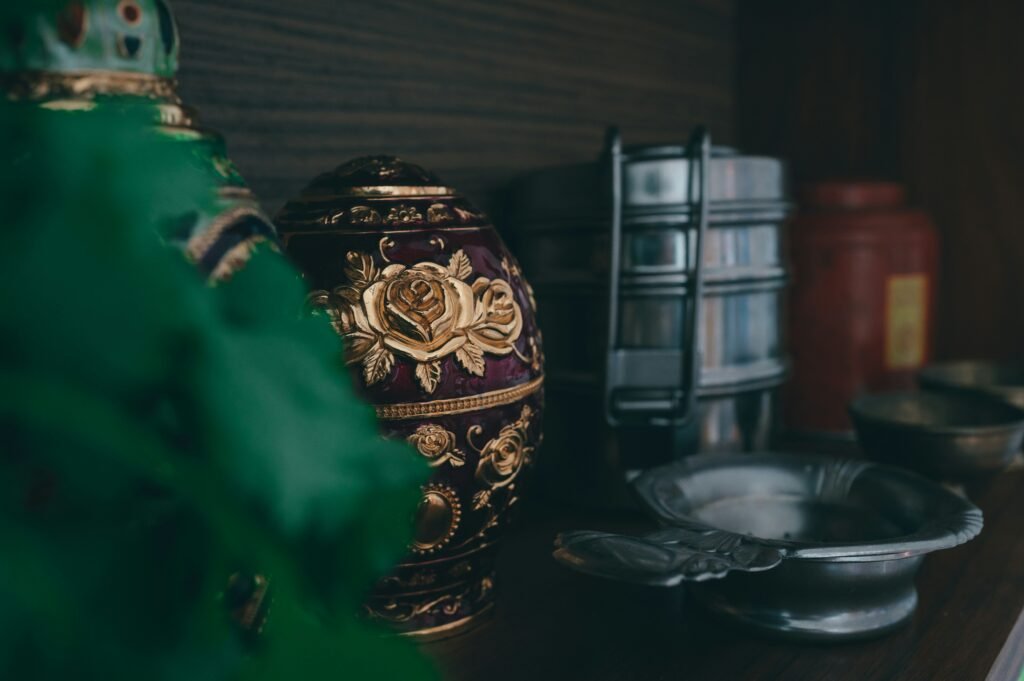
Personalised urns and keepsakes From hand-thrown ceramic urns to sculpted glass pieces, there are extraordinary craftspeople across the UK who create lasting tributes from cremated remains.
A celebration of life Many families who choose direct cremation go on to hold a celebration of life — a personal, informal gathering to honour the person they’ve lost, on their own terms and in their own time. It can happen days, weeks, or even months after the cremation, and can be as simple or as elaborate as feels right.
Scatter ceremonies Some families choose to mark the scattering of ashes with a formal ceremony — a boat trip out to sea, a gathering at a meaningful location, a moment of quiet ritual with the people who loved them most.
You don’t have to figure out what comes next alone
Now that you know what is direct cremation and what it means for your family, whatever path brought you here, the most important thing is that you find a way to say goodbye that feels right for you.
Celebrated Lives exists to make that journey a little easier. We bring together trusted UK memorial businesses — from celebration of life planners to memorial jewellery makers, scatter ceremony specialists to personalised keepsake creators — all in one warm, carefully curated space.
Explore What Comes Next — Browse All Memorial Services →
There is no timeline for grief, and no wrong way to say goodbye. Take your time, trust your instincts, and know that when you’re ready — we’re here.